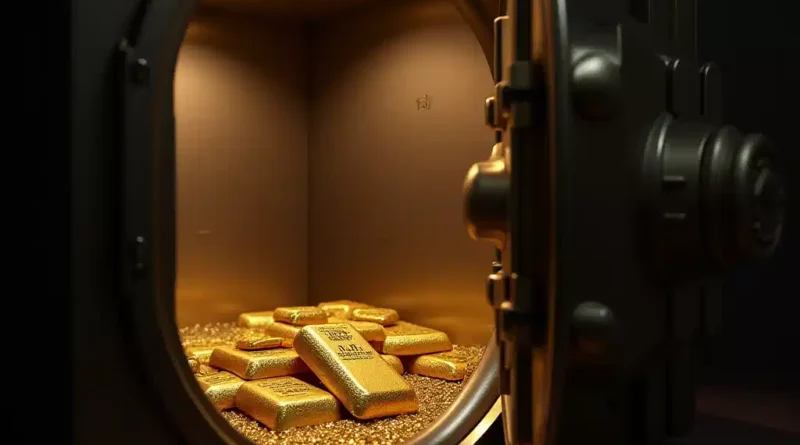
Gold News Article — November 02, 2026
Gold Market News: Central Bank Buying and Record Demand Drive Bullion Higher on November 2, 2026
Gold market news is dominated this week by a powerful combination of relentless central bank gold accumulation, resilient physical gold demand, and a fresh wave of institutional gold investment flows. As of November 2, 2026, spot gold is trading near $3,420 per ounce, consolidating just below the all-time highs set earlier this autumn, according to London Bullion Market Association (LBMA) benchmark pricing data. The metal has gained roughly 14% year-to-date, extending a multi-year bull run that analysts say is increasingly structural rather than speculative.
The latest leg higher was triggered by a trifecta of developments: a stronger-than-expected quarterly report on official-sector gold purchases, a downward revision to global mine supply forecasts, and dovish signals from major central banks that have pushed real yields lower. For investors tracking the gold market, the message is clear — the demand base for bullion has broadened well beyond the retail and ETF segments that traditionally drive short-term price action.
Central Bank Gold Buying Remains the Market’s Backbone
The World Gold Council’s (WGC) latest Gold Demand Trends update, published at the end of October, confirmed that central banks purchased a net 238 tonnes of gold in the third quarter of 2026. While that figure is below the record-setting pace of 2022–2023, it marks the fourteenth consecutive quarter of net official-sector buying — a streak unmatched in the post-Bretton Woods era.
Emerging-market reserve managers continue to lead the charge. According to IMF International Financial Statistics data, several central banks across Asia, the Middle East, and Latin America added to their gold reserves in September, with purchases concentrated among institutions seeking to diversify away from dollar-denominated assets. The WGC estimates that official-sector demand will total between 850 and 950 tonnes for the full year 2026.
“Central banks are not trading gold — they are reallocating reserves,” said a senior market strategist at a European bullion bank, speaking on condition of anonymity because of compliance restrictions. “The pace may ebb and flow with price levels, but the strategic direction is unmistakable. Every dip is being bought.”
- Q3 2026 official-sector purchases: 238 tonnes (WGC)
- Year-to-date central bank buying: approximately 690 tonnes
- Full-year 2026 forecast: 850–950 tonnes
- Consecutive quarters of net buying: 14
This persistent bid has fundamentally altered the gold market’s supply-demand balance. Unlike ETF flows, which can reverse quickly, reserve accumulation is sticky capital. Central banks rarely sell, and their purchases are typically executed through opaque over-the-counter channels or LBMA-accredited vaults, removing metal from the liquid float.
Mining Production Forecasts Trimmed as Grades Decline
On the supply side, the picture is equally supportive of higher prices. The WGC’s mine production data for the first half of 2026 showed output of 1,782 tonnes, marginally below the same period last year. Several major producers have revised full-year guidance downward, citing declining ore grades, permitting delays, and cost inflation at aging assets.
Industry consultancy Metals Focus now projects global mine supply of approximately 3,640 tonnes for 2026 — flat to slightly lower year-on-year — while total gold demand, including OTC flows, is running ahead of that pace. The resulting market balance has tightened, and recycled gold supply, which typically rises with prices, has so far failed to fill the gap meaningfully.
“The marginal cost of production keeps climbing, and new projects take a decade to bring online,” noted an analyst at a London-based research house. “We are in a period where supply is inelastic just as demand from official reserves and Asian consumers is structurally rising. That is a recipe for a higher price floor.”
Buy physical gold at competitive prices with GoldBroker.com — secure storage and worldwide delivery.
Gold Investment Demand: ETFs and Bar Coins Refill the Bid
After two years of outflows, gold-backed exchange-traded funds have returned to net inflows. According to WGC fund flow data, global gold ETFs added 42 tonnes in October, the third straight month of positive flows, with North American and European funds leading. Total ETF holdings now stand at roughly 3,290 tonnes, still below the 2020 peak but trending higher.
Retail gold investment is also robust. The Perth Mint and the U.S. Mint have both reported elevated sales of gold bullion coins in recent months, while premiums on small bars in Asian markets remain firm. In India, the world’s second-largest consumer market, jewellers report steady demand ahead of the wedding season, though record-rupee gold prices have tempered volume growth.
- Global gold ETF holdings: ~3,290 tonnes (WGC)
- October ETF net inflows: 42 tonnes
- Bar and coin demand: tracking above 2025 levels
- Jewellery demand: resilient in India and China despite high prices
The breadth of demand matters for the gold market’s durability. When official reserves, ETFs, and physical buyers are all leaning in the same direction, corrections tend to be shallow and short-lived.
Macro Backdrop: Real Yields, the Dollar, and Rate Expectations
Macroeconomic conditions continue to favour bullion. With inflation moderating but growth slowing in several major economies, markets are pricing further monetary easing from the Federal Reserve and other central banks. Lower nominal rates, combined with sticky core inflation, have pushed real yields lower — historically one of the strongest tailwinds for gold.
The U.S. dollar, meanwhile, has softened against a basket of major currencies, making dollar-denominated gold cheaper for non-U.S. buyers. A weaker dollar and falling real yields are the two variables most closely correlated with gold’s multi-month trend, and both are currently supportive.
Geopolitical risk remains an undercurrent. Trade tensions, regional conflicts, and questions over the trajectory of global reserve policy continue to drive safe-haven allocations. The IMF has repeatedly highlighted the growing role of gold in official reserves, noting that some central banks now hold a larger share of their reserves in gold than at any point in decades.
Expert Analysis: Is $3,500 the Next Stop?
Market strategists are broadly constructive. Several major banks have raised their 12-month gold price targets into the $3,500–$3,700 range, citing central bank demand and the likelihood of further rate cuts. Others caution that positioning is elevated and that a sharp repricing of rate expectations could trigger a correction.
“The gold market is not overstretched in the way it was during previous speculative peaks,” said a commodities research head at a global investment bank. “This rally is being led by reserve managers and long-term allocators, not leveraged traders. That makes it more resilient, but it also means the upside may unfold more gradually.”
Key risks to monitor include a stronger-than-expected U.S. labour market, a rebound in real yields, and any slowdown in official-sector purchases. On the upside, a further deterioration in fiscal conditions or a new geopolitical shock could accelerate flows into bullion.
Future Outlook: Structural Demand Meets Constrained Supply
Looking ahead to year-end and into 2027, the gold market appears well-supported. The WGC projects continued strength in central bank gold demand, while supply growth remains constrained by geology and capital cycles. ETF flows are turning positive, and physical demand in Asia is holding up despite elevated prices.
For investors, the takeaway from today’s gold news is that gold is functioning as both a strategic reserve asset and a portfolio hedge in an environment of falling real yields and persistent uncertainty. The metal’s ability to hold near record highs while absorbing profit-taking suggests a market with deep, committed buyers rather than momentum chasers.
As one veteran bullion analyst put it: “The question is no longer whether gold belongs in a portfolio — it’s how much. The central banks have already answered that question for themselves.”
Sources
- World Gold Council — Gold Demand Trends Q3 2026; Gold ETF Flows (October 2026)
- London Bullion Market Association (LBMA) — Benchmark pricing and vault holdings data
- International Monetary Fund (IMF) — International Financial Statistics, official reserve data
- Metals Focus — Mine production and supply forecasts, 2026
- Perth Mint and United States Mint — Bullion coin sales reports
- Market commentary from bullion bank and commodities research analysts (attributed where permitted)
Related Articles
Disclosure: Some links on this page are affiliate links. This means that, at zero cost to you, GoldRateToday.PRO may earn a commission if you click through and make a purchase. We only recommend products and services we believe in.